



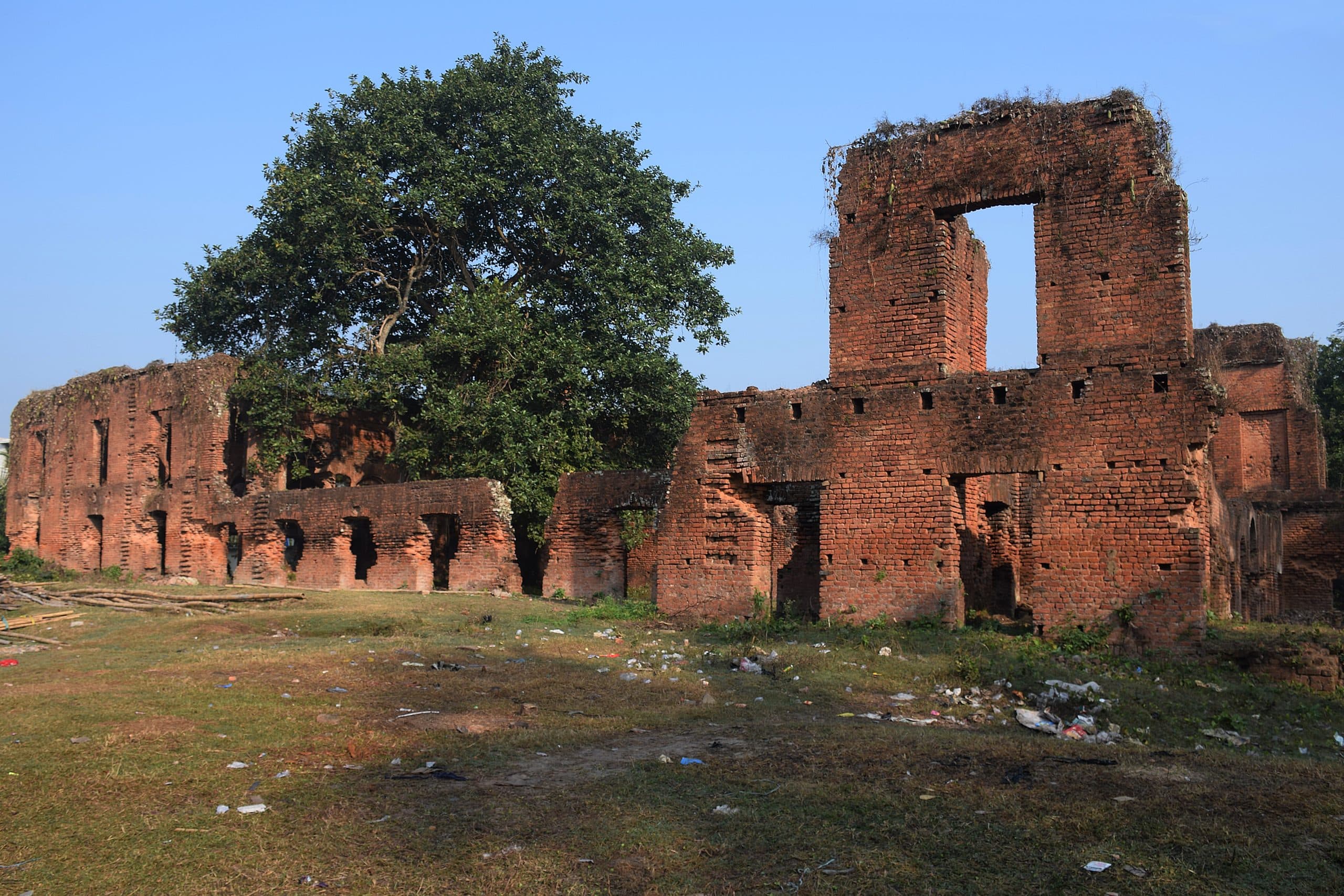
Tamralipti, an ancient settlement, is frequently mentioned in early Indian literature, Ceylonese texts, and accounts by Greek geographers and Chinese pilgrims. These sources situate Tamralipti on India’s eastern coast, near the confluence of the Bay of Bengal and the Ganges River. Renowned for its trade routes, the settlement was frequented by traders, travelers, and pilgrims. Based on these texts, scholars estimate the chronology of Tamralipti from the 4th-3rd century BCE to the 8th century CE. The 8th-century CE Dudhpani rock inscription by Udaymana makes the last known mention of Tamralipti as a significant port of ancient South Asia. Greek geographer Ptolemy refers to it as Tamalities, while the Chinese pilgrim Xuanzang calls it Tan-mo-lih-ti.
Identification of Tamralipti
These textual references have led scholars to identify Tamralipti as one of the most important trade and commerce centers of early historic India. They suggest that the settlement emerged as a thriving urban center during its period of prominence, establishing multidirectional links with various geographical regions of South Asia.
Though its exact location is debated, scholars generally agree that modern Tamluk town in West Bengal’s Medinipur district (historically known as Midhunapura) corresponds to the site of ancient Tamralipti. Tamluk is situated on the banks of the Rupnarayan River near its confluence with the Bay of Bengal.
Archaeological Investigations
Tamralipti has been subjected to archaeological excavations multiple times. In the late 18th century, ICS Gourdas Basak was among the first to document Tamluk’s antiquities. His findings were published in the Jan-Dec 1888 issue of Proceedings of the Asiatic Society of Bengal. Around the same time, Umacharan Adhikari, a notable figure from Tamluk, authored an account of the town’s antiquity.
In 1920-21, the Archaeological Survey of India (ASI) produced a brief report on Tamluk. Later, in 1940, Sir Gurusaday Dutt, T.N. Ramachandran, and K.N. Dikshit conducted systematic excavations. They unearthed terracotta objects, pottery, and coins, some dating back to the 3rd century BCE. Subsequent excavations in 1954-55, led by M.N. Deshpande, revealed a four-fold cultural sequence. However, no substantial structural remains were found, only rammed floors and ring wells.
Further excavations in 1973-74, supervised by S.K. Mukherjee, revealed four occupational periods:
- Period I (Neolithic): Discoveries included Neolithic celts, ill-fired pottery, microlithic tools, bone awls, and copper objects.
- Period II (Maurya-Shunga): Artifacts included Northern Black Polished Ware (NBPW), semi-precious stone beads, punch-marked coins, and a brick-built tank.
- Period III (Shunga-Kushana): This phase yielded ceramics, terracotta figurines with Hellenistic influence, and signs of a sophisticated urban life.
- Period IV (Gupta): Artifacts from this period were less significant and did not align with descriptions by Chinese pilgrims.
Subsequent Discoveries
Between the 1950s and 1970s, independent scholars like P.C. Dasgupta conducted extensive research on Tamralipti’s history, recovering terracotta figurines and other significant antiquities. Since 1974, the Tamralipta Research and Museum Centre has continued independent exploration, revealing early historic sites in the region.
Cultural and Artistic Heritage
Tamralipti’s artifacts highlight its rich cultural and artistic heritage. Pottery types such as Rouletted Ware, Grey Ware, Red Ware, Black Polished Ware, and Northern Black Polished Ware have been found. Additionally, exquisite terracotta objects, including figurines of yakshis, animals, and plaques depicting everyday life, are preserved in the Tamluk Museum. The famous yakshi figurine at the Ashmolean Museum, Oxford, was also recovered from Tamluk. While questions about its Chalcolithic origins remain unresolved, the discovery of Black and Red Ware alongside numerous bone objects adds complexity to the issue.
Conclusion
Tamralipti stands as a symbol of ancient India’s thriving trade, cultural, and artistic legacy. Its strategic location and archaeological findings underscore its significance as a flourishing urban center and a pivotal node in South Asia’s trade networks. Continued research promises to unveil more of this ancient port city’s mysteries.
Compiled by
Mili Rahman
Associate Professor
Dhaka International University

