



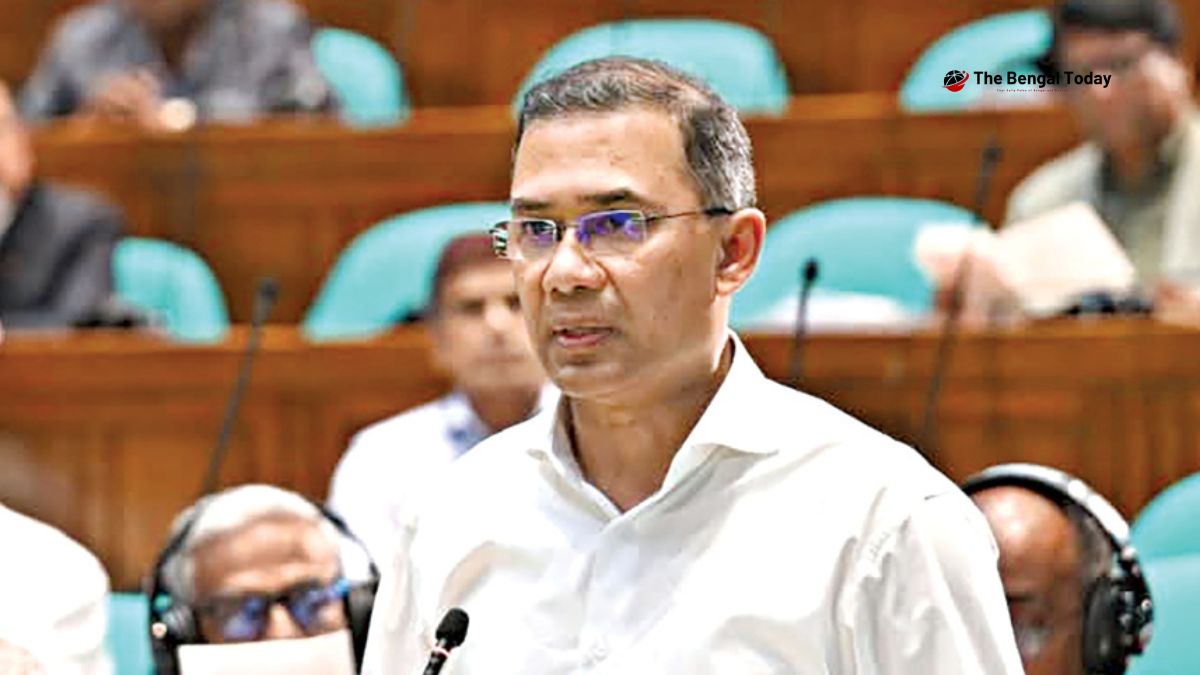
Prime Minister Tarique Rahman has directed the relevant authorities to take strict measures to ensure that doctors remain present at their workplaces during office hours, preventing patients from being deprived of essential healthcare services at public hospitals. Additionally, he emphasized that patients must receive all necessary medicines free of charge, instructing officials to increase the medicine budget if necessary to guarantee an uninterrupted supply.
The Prime Minister issued these key directives during a high-level review meeting at the Ministry of Health, marking his first official visit to the ministry since assuming office.
The meeting, which lasted around three and a half hours in the health ministry’s conference room, was attended by Health Minister Sardar Md Sakhawat Husain, State Minister for Health MA Muhit, Health Secretary Quamruzzaman Chowdhury, additional secretaries, heads of various health agencies, and project directors.
According to meeting participants, the issue of doctors’ attendance at public hospitals was discussed for nearly an hour. The Prime Minister noted that many doctors remain absent from their assigned stations, while others leave shortly after signing the attendance register to attend to personal matters or private practice—a culture that will no longer be tolerated.
Clarifying the Prime Minister’s stance on absentee doctors, Health Secretary Quamruzzaman Chowdhury said:
“Our doctors are highly skilled and capable, but they must remain present at their workplaces and serve the public as expected. The primary responsibility for ensuring their presence rests with civil surgeons, hospital directors, and supervisory officials. Directives have been issued to strictly monitor staff so that no one skips duty.”
The Prime Minister placed maximum emphasis on ensuring that no patient seeking treatment at a public hospital is turned away without receiving required medicines.
Currently, public hospitals are required to procure 75 percent of their medicines from the state-owned Essential Drugs Company Limited (EDCL) and the remaining 25 percent through open tender. However, due to EDCL’s capacity constraints, delays in medicine supply frequently occur. To resolve this bottleneck, discussions were held on increasing the open tender procurement quota to 50 percent to prevent drug shortages at health facilities.

