



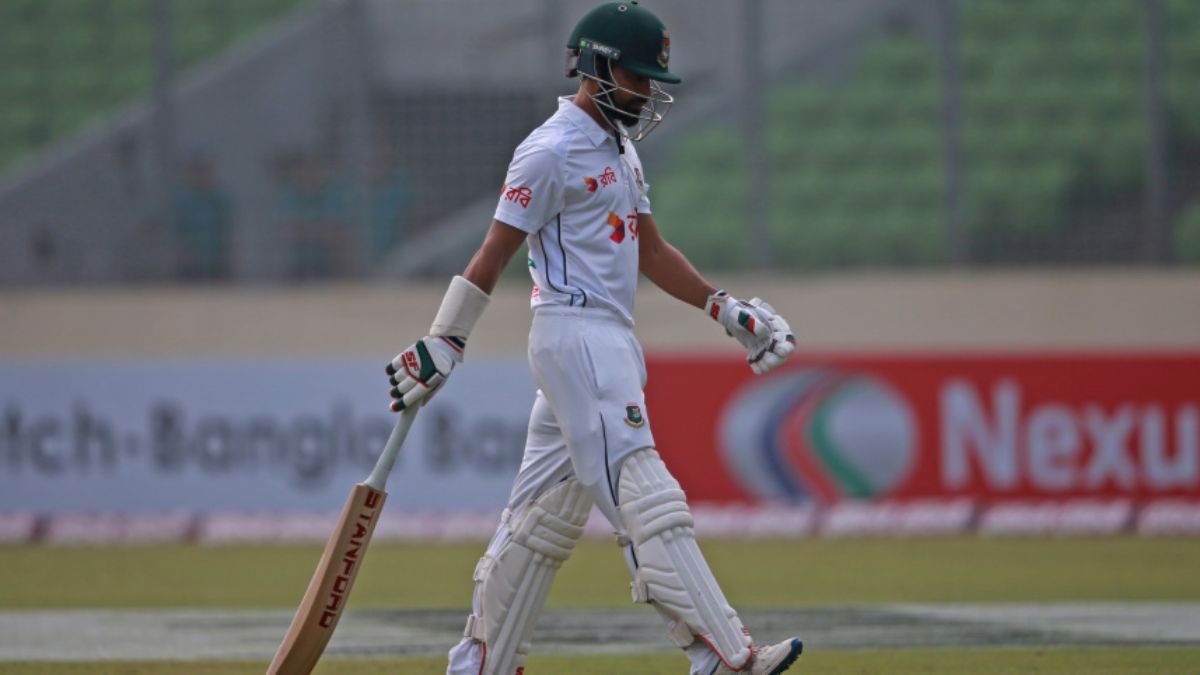
As Bangladesh prepares for its historic first Test tour of Australia in 23 years, injury concerns over key players Nahid Rana and Litton Das have added early tension to the camp. While both remain integral to the Test setup, the ultimate success of the tour hinges on a larger question: can the Tigers’ batting lineup stand tall against Australia’s world-class attack on bouncy Down Under tracks?
Bangladesh’s pace attack, bolstered by the emergence of raw talent like Nahid Rana, has quietly transformed into the second-fastest unit in Test cricket. Cricket Australia’s official platform, cricket.com.au, recently highlighted this shift: “Nahid Rana, Taskin Ahmed, and Shoriful Islam may not be household names Down Under, but the trio leads an emerging pace group that data suggests is Australia’s equal in terms of pure ball speed.”Statistical metrics reveal that since March 2024, pacers from both Bangladesh and Australia have averaged speeds exceeding $140\text{ km/h}$, establishing them as the two fastest pace batteries in the modern red-ball game. However, while this firepower promises an exciting battle for Australian spectators, it presents a daunting prospect for Bangladesh’s own batters—particularly in the wake of their recent innings defeat in the one-off Test against Zimbabwe in Harare.
The collapse in Harare raised serious concerns, coming on the heels of a commendable run where Bangladesh produced competitive performances against top-tier opposition like Pakistan, New Zealand, and Australia across red-ball and white-ball formats.
The Tigers’ batting unit struggled with application in Zimbabwe. While Bangladesh had grown accustomed to sporting tracks at home, Harare offered distinct challenges—most notably steep bounce and extra seam movement. The batters were repeatedly tested outside the off-stump and fell into the trap of trying to force the scoring rate in both innings. With conditions in Darwin and Mackay expected to heavily favor Australia’s pace attack, adapting quickly will be crucial to survival.
Batting coach Mohammad Ashraful pointed out that a lack of warm-up fixtures hindered the team’s ability to adjust to foreign conditions in Zimbabwe. To avoid a repeat, the squad departs for Australia on August 1, giving them ample time ahead of a four-day warm-up match against a Cricket Australia XI starting August 6.
“It will be tough in Australia, but the positive is that we are traveling 10 to 12 days in advance. We will have the opportunity to play a practice match, and hopefully, if all our players stay fit, we can deliver a strong performance,” Ashraful noted on Wednesday.
Despite the recent stumble in Harare, the batting coach remained defensive of his unit’s broader trajectory over the past year.
“Our batters have done remarkably well over the last seven months. One match or one series can go wrong, but in the four Tests prior to that, our unit played exceptionally well,” he asserted. “Losing a game or two in unfamiliar conditions shouldn’t demoralize us. The players have gained invaluable experience competing across different environments.”
Much of Bangladesh’s recent Test stability has relied on Litton Das’s ability to anchor the lower-middle order at number six. His masterful innings alongside the tail against Pakistan in May proved decisive in securing a competitive first-innings total during the second Test.
With Litton’s availability currently hanging in the balance as he awaits medical scan results from Singapore, significant questions remain over how Bangladesh’s batting order will absorb the relentless pressure of Australia’s world-class attack.

