



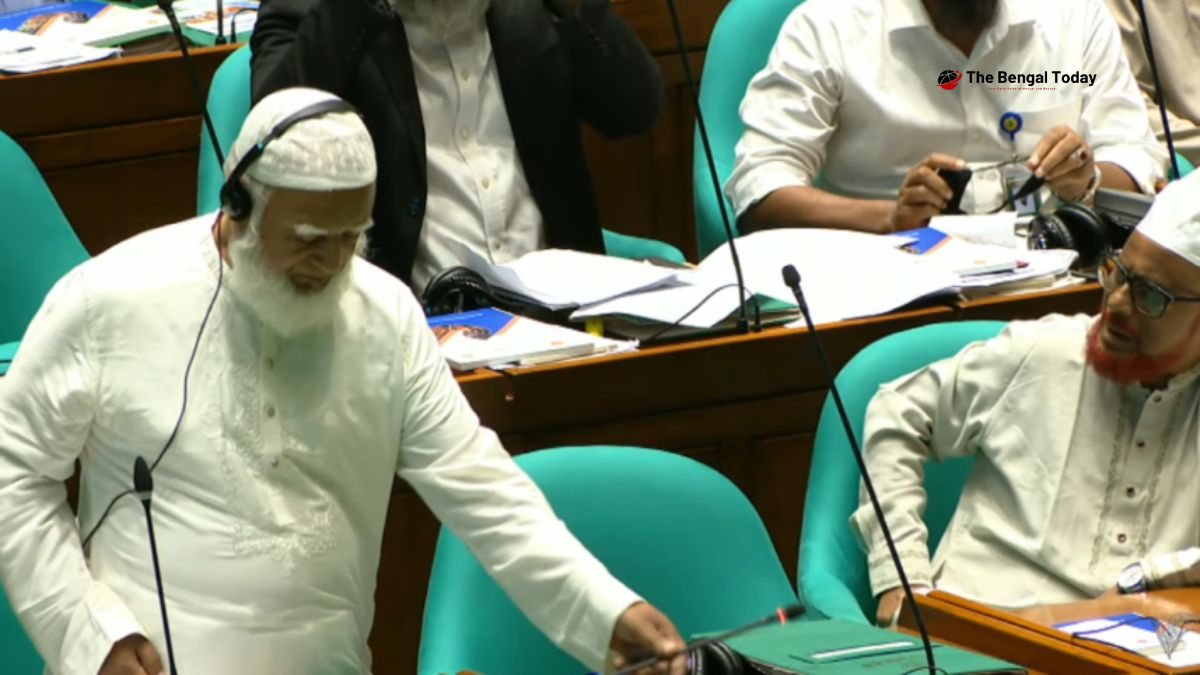
Opposition lawmakers staged a walkout from the National Parliament right before the passage of two key pieces of legislation concerning human rights and enforced disappearances, terming the proposed laws “weak” and plagued by double standards.
The walkout occurred around 8:00 PM on Sunday (September 6, 2026), just as the ‘National Human Rights Commission (Amendment) Bill 2026’ was presented for passage. Members of Parliament from Bangladesh Jamaat-e-Islami and other opposition alliance parties exited the session room prior to the scheduled tabling of the highly discussed ‘Enforced Disappearance Prevention and Redress Bill 2026’. Taking the floor, Opposition Leader Dr. Shafiqur Rahman alleged that after letting the former interim government’s stronger ordinances expire, the current administration introduced bills containing an explicit dual standard. He pointed out that while the Commission holds direct investigative authority over human rights violations committed by private citizens, it is restricted to merely requesting explanations when state law enforcement agencies are involved—a loop that impedes accountability for state security forces.
Following the opposition’s departure, Speaker Hafiz Uddin Ahmad acknowledged the walkout and proceeded with parliamentary business. Law Minister Md. Asaduzzaman rejected the opposition’s criticisms, asserting that the proposed legislation is stronger than equivalent human rights frameworks across the subcontinent. He highlighted that the selection committee’s leadership was assigned to the Speaker rather than the Prime Minister, placing parliamentary neutrality at the core of the institution. Notably, ordinances promulgated under the previous interim government led by Professor Muhammad Yunus automatically lapsed after the BNP-led government did not ratify them within the mandatory first 30 days of the 13th Parliament. This marks a continuation of parliamentary friction, as opposition members had previously boycotted proceedings on August 27 and walked out of subsequent Parliamentary Standing Committee meetings over similar grievances regarding unaddressed stakeholder feedback.

