



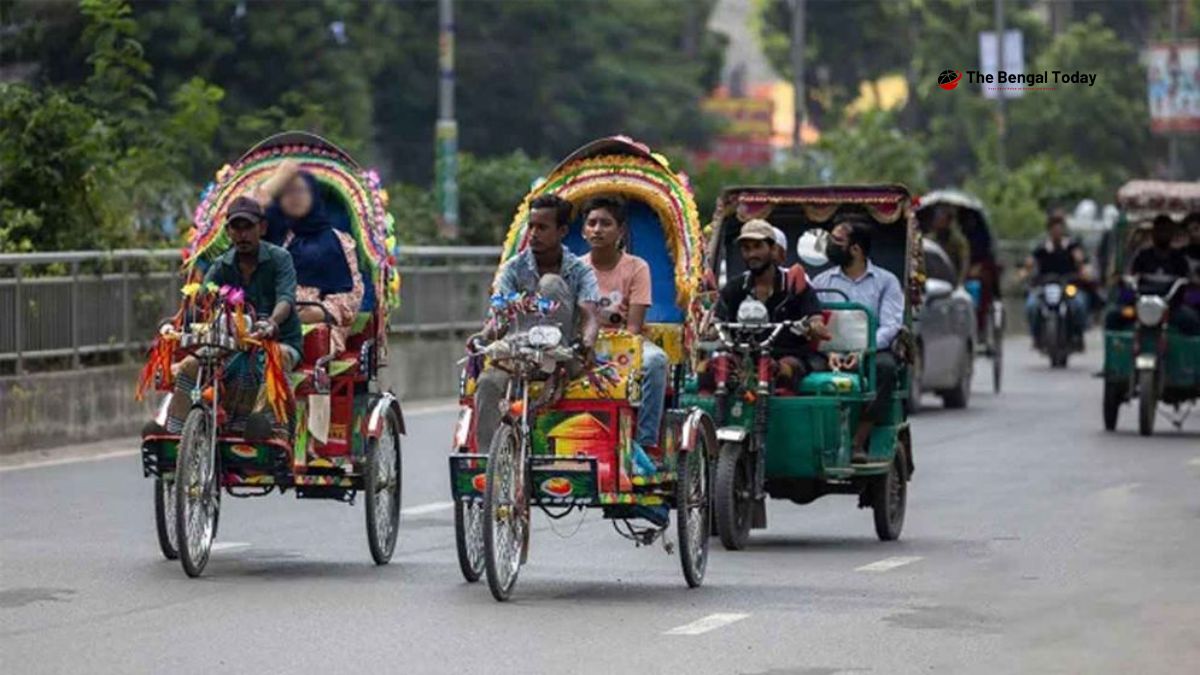
The government will soon enforce a comprehensive policy framework to restore order to Dhaka’s road network while safeguarding the livelihoods of auto-rickshaw drivers, Home Minister Salahuddin Ahmad announced. Under the new regulations, every authorized auto-rickshaw will be outfitted with a QR code and a digital tracking system to prevent operators from illegally running multiple vehicles under a single registration number.
Addressing a written question in Parliament on Monday (September 7, 2026), the Home Minister outlined the government’s multi-pronged strategy. The initiative includes phasing out lead-acid batteries in favor of eco-friendly lithium alternatives and restricting auto-rickshaw operations to designated zonal feeder routes. Minister Ahmad noted that while battery-powered three-wheelers have driven informal employment and mobility over the past decade, their unregulated expansion has created critical challenges for road safety, public health, and power sector management.
Highlighting energy losses and fiscal impacts, the Home Minister revealed that Bangladesh currently operates an estimated 5 to 8 million electric three-wheelers, consuming approximately 5% of the nation’s total electricity production. However, only about 3,300 authorized charging stations exist nationwide, contrasted with an estimated 48,000 informal and illegal charging hubs operating in Dhaka alone. These unauthorized connections result in an annual revenue loss of approximately BDT 4,000 crore for the government. To curb this, the authorities have banned auto-rickshaws on major arterial avenues in Dhaka, supported by joint drives by the Dhaka Metropolitan Police (DMP), DESCO, and DPDC to disconnect illegal power lines and impound unauthorized vehicles.

