



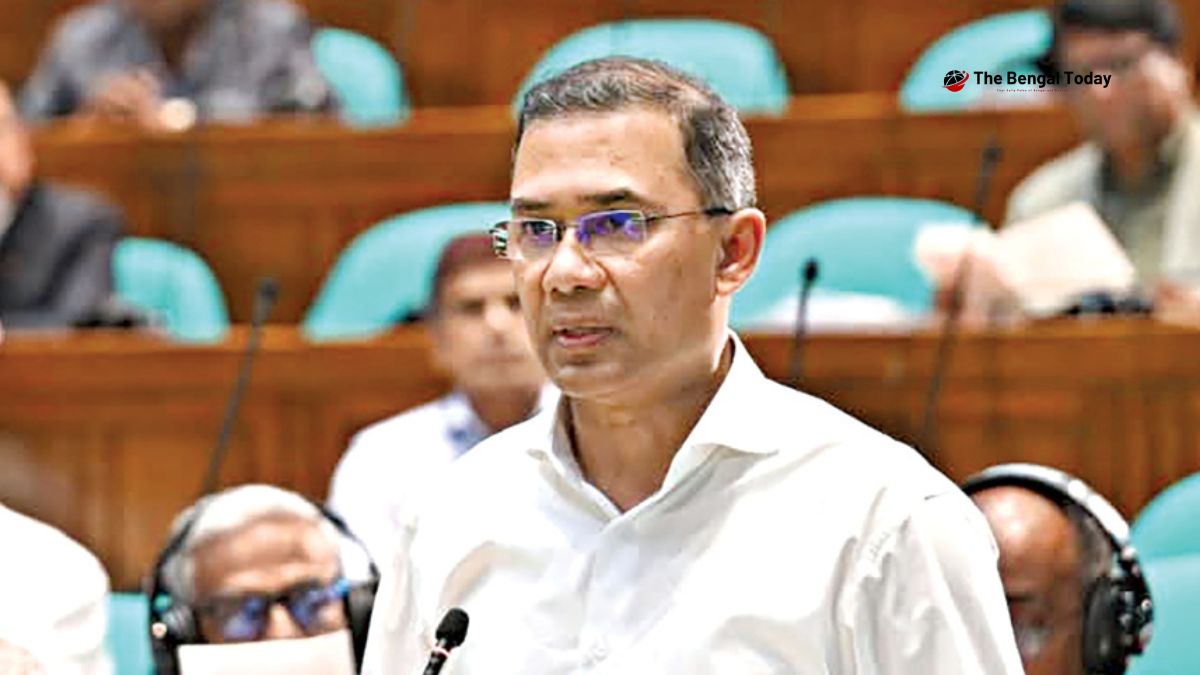
Prime Minister and Leader of the House Tarique Rahman announced in Parliament that the government is implementing a comprehensive master plan to tackle sudden gas shortages in the industrial sector. To safeguard the national economy and industrial production during supply disruptions, he unveiled several far-reaching initiatives, including the construction of a new deep-sea Floating Storage Regasification Unit (FSRU).
Addressing the parliamentary session, the Prime Minister stated that the new LNG terminal would significantly increase feed-in capacity to the national gas grid. Priority under this distribution framework will be accorded to export-oriented EPZs and BSCIC industrial estates to ensure uninterrupted fuel supplies. Concurrently, the government has identified renewable energy as a primary transition sector to reduce long-term import reliance, aligning operations with established targets for 2030. To incentivize rooftop solar adoption, PM Rahman announced a tariff feed-in scheme: consumers feeding surplus solar electricity into the national grid by February 28, 2027, will receive BDT 10.50 per unit for the subsequent three years.
To restore discipline and fiscal transparency in project management, the Leader of the House noted that rigorous pre-implementation feasibility studies have been made mandatory to curb artificial cost and timeline overruns. Addressing ongoing investigations into bloated budgets and corruption associated with mega-projects under the former Awami League regime, he confirmed that the government is taking phased legal and administrative actions based on the white paper published by the interim government, successfully slashing inflated expenditures across multiple projects.

