



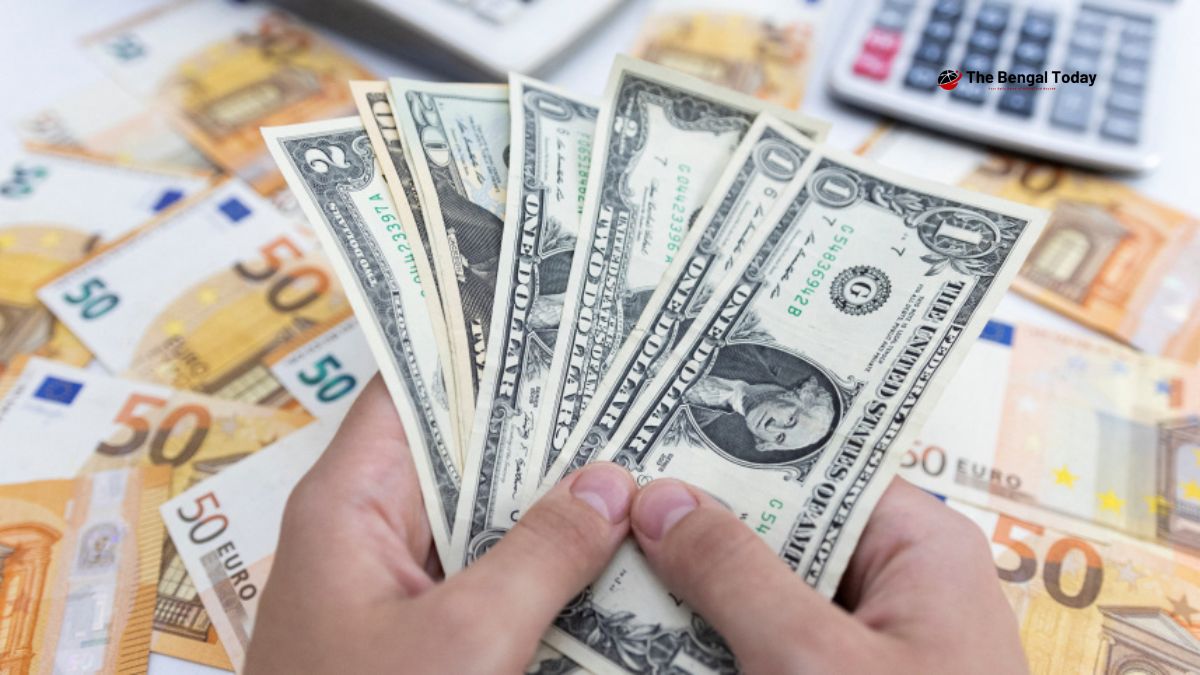
According to the latest data from Bangladesh Bank, the US dollar continues to strengthen against the Bangladeshi Taka due to heavy pressure on commercial banks to settle outstanding and new letters of credit (LCs) for crude oil and natural gas imports. On Tuesday, the exchange rate in the interbank forex market rose to BDT 123.87 per USD, up from BDT 123.75 on Monday, BDT 123.73 on Sunday, and BDT 123.45 a week earlier.
In the first half of the FY 2026–27 fiscal year, elevated global energy prices pushed Bangladesh’s total import expenditure up by 12% to $12.20 billion. Fuel and energy import bills alone doubled during this period, reaching $2.49 billion USD.
Commercial Bank Exchange Rates: Eastern Bank set its dollar selling rate yesterday at BDT 123.98 and buying rate at BDT 122.98. State-owned Sonali Bank quoted cash dollar rates between BDT 122.63–122.90 for buying and BDT 123.90 for selling.
Month-End Supply Squeeze: A central bank official noted that while total dollar buy-and-sell volumes across banks remain roughly balanced, month-end demand surges due to mandatory import bill settlements. Combined with a temporary mid-month slowdown in remittance inflows, this creates short-term liquidity imbalances. Between October 1–24, remittance inflows totaled $2.13 billion USD, compared to $2.00 billion during the same period last year.
Strong Foreign Exchange Reserves: Despite short-term exchange rate volatility, the nation’s net foreign exchange buffer remains comfortable. Under the IMF’s BPM6 accounting methodology, Bangladesh’s net reserves stood at $31.54 billion USD as of October 19, up significantly from $26.34 billion recorded during the same period last year.

