



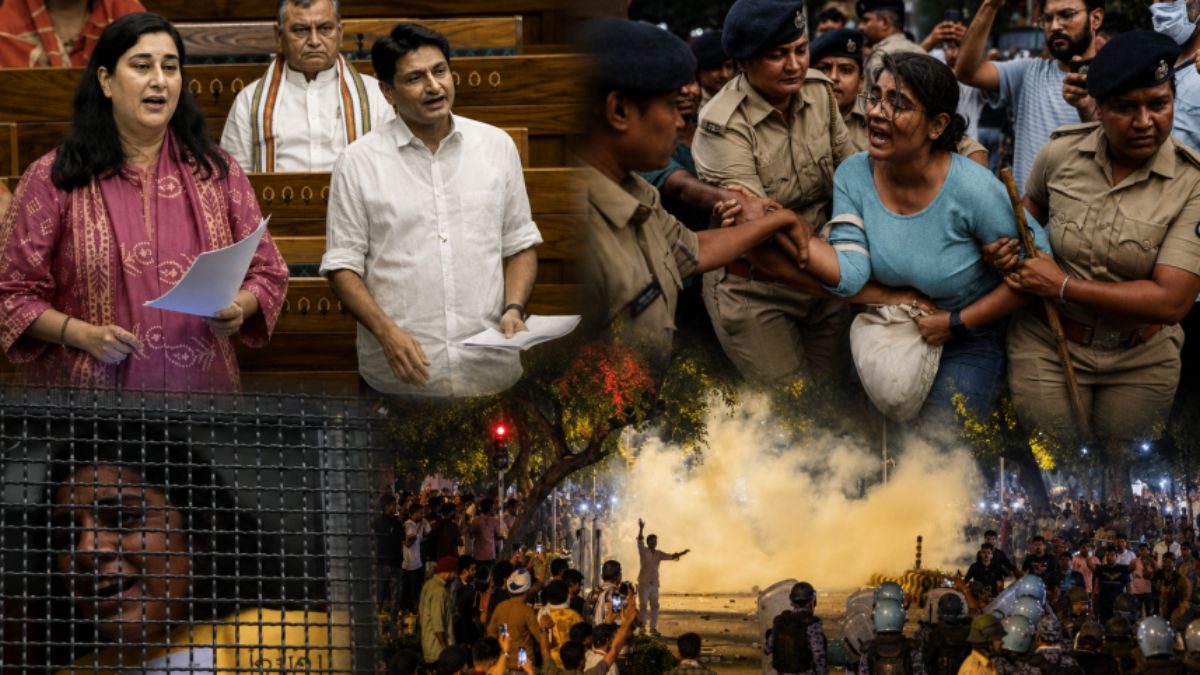
An unprecedented scene was recently witnessed in the Indian Parliament. Amidst the decades-old solemnity of parliamentary language, popular “Gen-Z” slang from internet and social media culture has suddenly made its entry.
Terms like “Delulu” (delusional/detached from reality), “FOMO” (fear of missing out), and “Clocked it” (catching or understanding something right on time) are now being used by Indian lawmakers. Typically found in Instagram comment sections, messaging apps, or meme pages, these expressions echoed loudly in Parliament, particularly during debates over examination irregularities and paper leaks.
However, behind this visible touch of modernity lies a stark contradiction—on one hand, politicians are adopting youth slang inside the legislature to build a connection with young people, while on the other, those very youths protesting on the streets are met with police baton charges, arrests, and legal cases.
The emergence of these terms among senior leaders is far from accidental humor; it is backed by strategic political calculations and a deliberate PR strategy aimed at creating reels, shorts, and viral clips.
Shiv Sena’s Usage: When Shiv Sena MP Shrikant Shinde labeled the opposition “MIA” (Missing in Action) for their absence, cited “FOMO” regarding missed political trends, and dubbed them “Delulu” to imply detachment from reality, the intentional selection of these words was clear.
BJP’s Take: Ruling party MP Bansuri Swaraj claimed that Prime Minister Narendra Modi “clocked it” by introducing anti-paper leak legislation.
Opposition Joining the Trend: Opposition leader Supriya Sule initially expressed surprise, asking, “Why are we speaking in Gen-Z language?” Yet moments later, she too used the word “Delulu” to counter her political opponents.
Political scientist Rahul Verma notes that while politicians previously relied on Bollywood dialogue (such as “How’s the josh?”) or cricket references to connect with voters, modern Gen-Z slang is simply the digital evolution of that tactic. However, digital anthropologist Payal Arora emphasizes that mimicking daily youth slang does not translate to policy changes; instead, young people often view this hollow PR packaging as “cringe” or artificial.
The flashy Gen-Z lingo used inside Parliament stands in sharp, grim contrast to the reality on the streets.
Millions of young people across India face mounting uncertainty about their futures, severe unemployment, and recurring scams involving leaked question papers for government recruitment and entrance examinations. Driven by this accumulated frustration, youth-led movements like the social media-driven and street-active “Cockroach Janata Party” (CJP) spread rapidly. As hundreds of thousands of students took to the streets, the movement generated unprecedented pressure on the administration.
While politicians wear a façade of modernity by borrowing Gen-Z language in Parliament to appeal to the youth, state power and police force are deployed to handle those same youths’ legitimate grievances and anger. This hypocritical approach highlights a major structural crisis in contemporary Indian politics and policymaking.

