



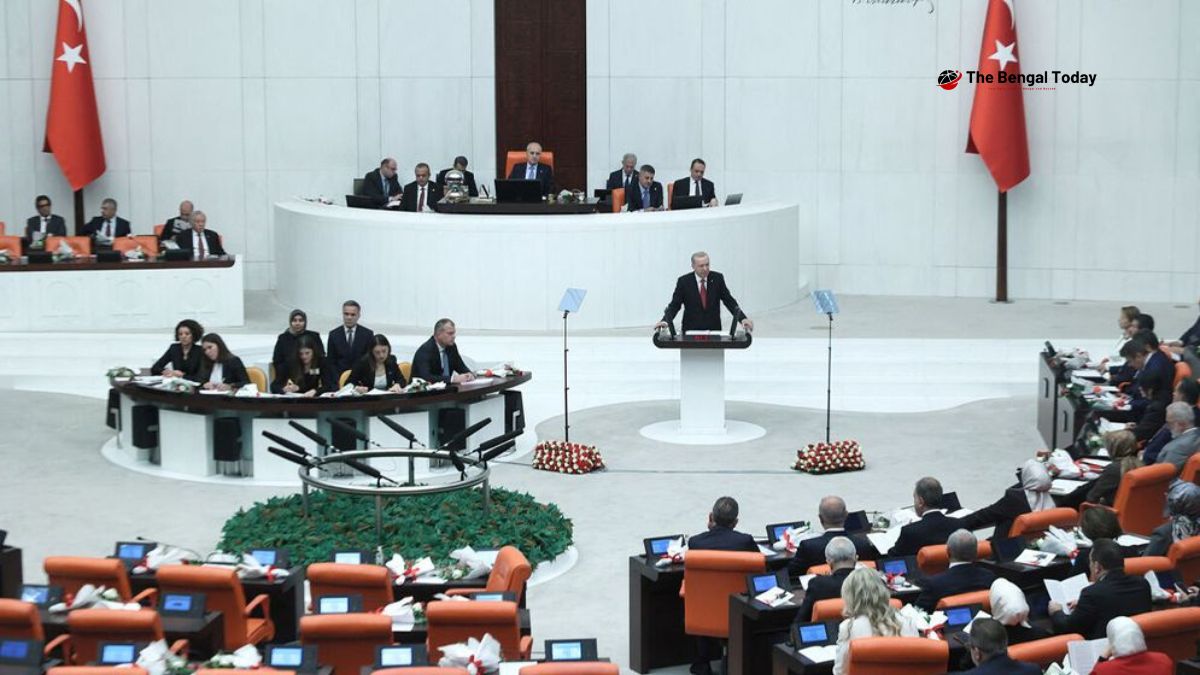
The Ministry of Foreign Affairs of Türkiye has formally submitted the recently signed Mecca Joint Defence Agreement—a tripartite military pact between Türkiye, Saudi Arabia, and Pakistan—to the Grand National Assembly of Turkey for official parliamentary ratification.
In accordance with Article 90 of the Turkish Constitution, which stipulates that international treaties require parliamentary approval to take effect, the bill was forwarded to Parliamentary Speaker Numan Kurtulmuş, who referred it to the Foreign Affairs Commission for detailed review. However, constitutional and legal frameworks dictate that treaty ratification and the deployment of Turkish Armed Forces overseas remain two entirely distinct legal procedures.
The bill is expected to spark intense debate in the Foreign Affairs Commission. The main opposition Republican People’s Party (CHP) raised strong objections, warning that the agreement could entangle Turkish troops in volatile Middle Eastern conflict zones, including Yemen.
Ratification does not require a two-thirds or qualified supermajority in parliament. Approval can be granted by a simple majority of members present and voting. With President Recep Tayyip Erdoğan’s ruling Justice and Development Party (AKP) and its coalition allies holding a firm majority, parliamentary approval is virtually assured.
Treaty approval does not grant automatic authorization to deploy Turkish troops or military hardware abroad. To deploy armed forces, the Erdoğan administration must draft and pass a separate deployment resolution (mandate) under Article 92 of the Turkish Constitution, detailing the scope, duration, and operational limits of the mission.
The Ministry of Foreign Affairs reaffirmed that the agreement is strictly defensive in nature, aimed at safeguarding national sovereignty and securing critical geopolitical infrastructure across signatory states.

