



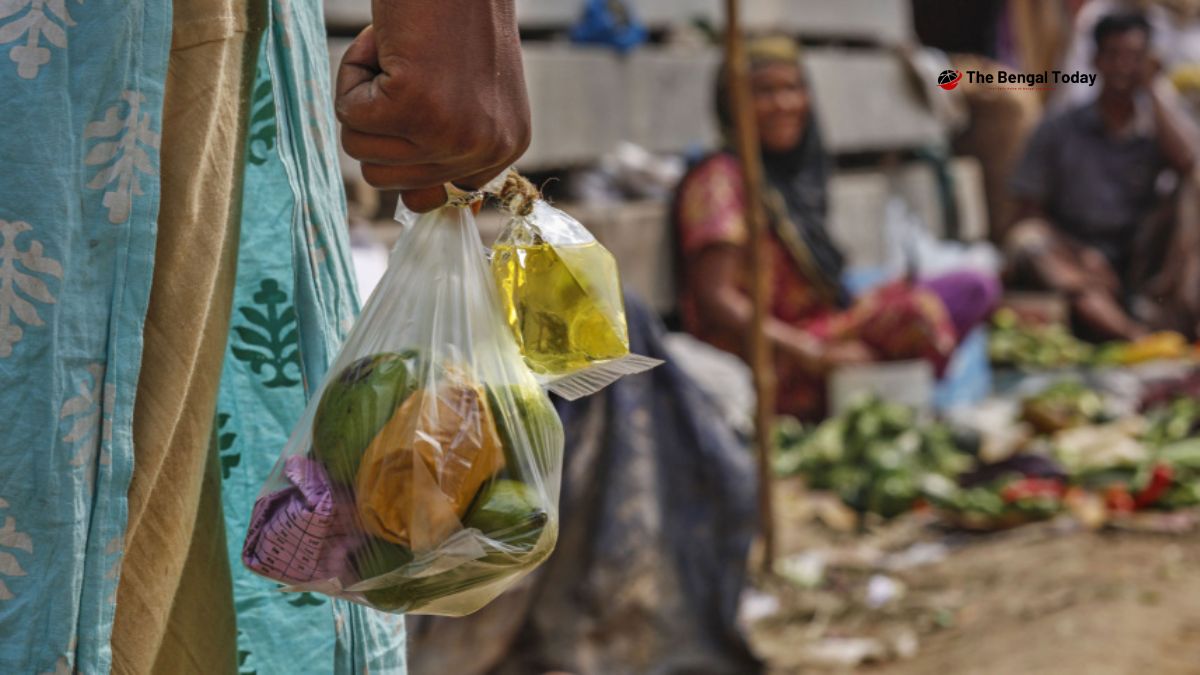
Why does the market basket remain empty even after spending an entire month’s salary of 30,000 BDT? Why does the household budget stall under escalating expenses, even with unchanged house rent, the same basic groceries, and a constant standard of living? The sole answer to this phenomenon is inflation—or the diminishing purchasing power of money.
Simply put, when the same amount of currency buys fewer goods or services than before, it is defined as inflation in economic terms.
Analysis of 749 varieties across 383 goods by the Bangladesh Bureau of Statistics (BBS) reveals that when inflation is reported as falling, it merely indicates a deceleration in the rate of price increases—not a reversal to original price levels.
A Simple Economic Illustration: Consider a kilogram of rice that increased from 100 BDT to 108 BDT last year (an 8 BDT increase). The following year, it rose from 108 BDT to 115 BDT (a 7 BDT increase). Although the reduced rate of increase lowers the inflation index, the actual retail price of rice remains elevated at 115 BDT.
Impact on Savings and Real Income: Fixed-income earners and low-income households face a double burden: real wage growth (8.22%) trails behind the inflation rate (8.32%), while the real value of bank savings steadily erodes.
Driven by higher import costs, foreign exchange constraints, elevated transportation expenses, and market distortions, price increases rarely reverse. Ultimately, inflation is not merely an increase in the cost of goods—it represents buying less quality of life for the same income.

