



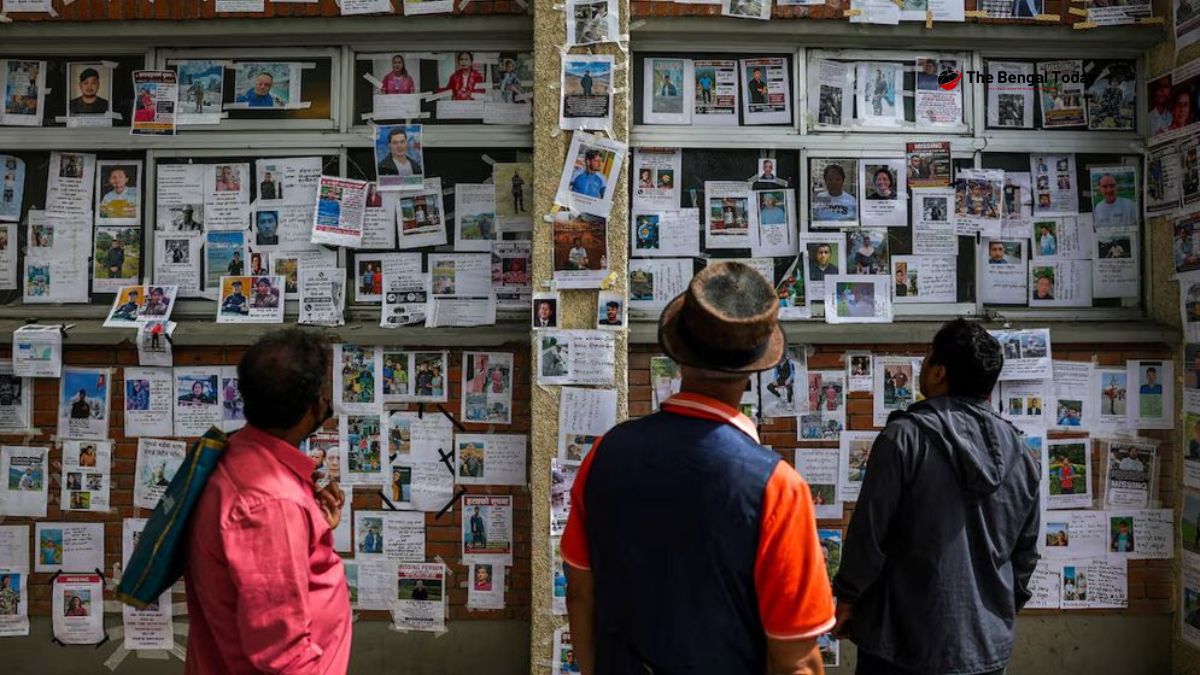
In the wake of catastrophic glacial bursts, flash floods, and severe landslides along the Nepal-China border that have claimed over 1,243 lives, Nepal finds itself engulfed in a profound humanitarian crisis. With more than 4,500 people still unaccounted for, the brick walls of Tribhuvan University Teaching Hospital in Kathmandu—lined with hundreds of portraits—have turned into a poignant last resort for grieving families searching for missing loved ones.
Emergency responders confirmed on Thursday (September 3, 2026) that as over a week has passed since the natural disaster struck on August 26, hopes of locating survivors beneath the debris are rapidly diminishing. The hospital’s makeshift “Wall of Hope” features color photographs, identity details, contact numbers, and close-up images of distinctive markings like tattoos to assist in body identification. Desperate families gather daily before the photo displays, praying for a miracle, while authorities estimate that nearly 900 workers remain trapped across various hydroelectric power stations.
Meanwhile, at the historic Pashupatinath Temple on the banks of the Bagmati River in Kathmandu, even more heart-wrenching scenes are unfolding. Unable to recover the physical remains of their relatives, families are performing final rites by burning symbolic straw effigies in accordance with Hindu traditions. As the Nepali government prepares to seek international climate compensation and rebuilding aid, grief and profound uncertainty loom over thousands of households across the Himalayan nation.

