



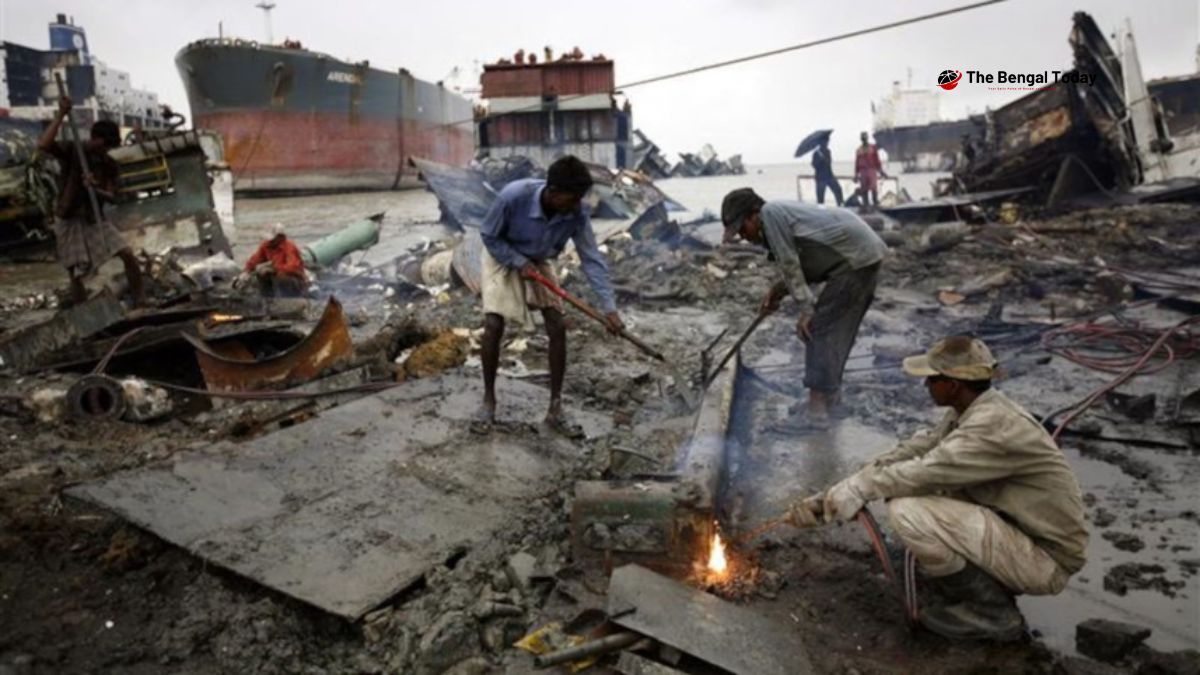
Beyond structural scrap steel, decommissioned ships entering Bangladesh’s dismantling yards carry hazardous legacies: friable asbestos, toxic paints, heavy metals, polychlorinated biphenyls (PCBs), and volatile gases. Gas cutting releases dangerous fumes into unventilated chambers, while trapped flammable gases frequently trigger fires, explosions, and fatal asphyxiation.
Data from the voluntary organization Young Power in Social Action (YPSA) indicates that 161 shipbreaking workers died in Chittagong yards over a 13-year period (2014–2026). The ongoing peril was underscored again on Friday, when nine workers died from toxic gas inhalation during a ship-dismantling operation. A 2025 study by the US-based Micro Think Institute revealed that inadequate safety measures have claimed over 400 lives and left more than 6,000 workers severely injured over the past two decades.
Human Rights Watch reports that the average life expectancy of male shipbreaking workers in Bangladesh is nearly 20 years lower than the national average.
While Bangladesh ratified the Hong Kong International Convention on June 26, 2023, and maintains domestic regulatory frameworks (Labor Act 2006, Ship Recycling Rules 2011, Bangladesh Ship Recycling Act 2018, Environment Conservation Act 1995), enforcement on the ground remains profoundly inadequate. Statutory compensation under Bangladeshi labor law stands at Tk 2 lakh ($1,650) for fatal accidents and Tk 2.5 lakh for permanent disability—sums widely criticized as grossly inadequate relative to the extreme life risks involved.
Human Rights Watch and the NGO Shipbreaking Platform documented systemic safety deficits across the sector: laborers cutting hot metal using ordinary socks as makeshift gloves, wrapping shirts around their faces to block toxic fumes, and carrying massive iron plates barefoot without formal contracts or medical support.
Addressing these enforcement gaps, Mohammad Mahbubul Hasan, Deputy Inspector General of the Department of Inspection for Factories and Establishments (DIFE) in Chittagong, stated:

