



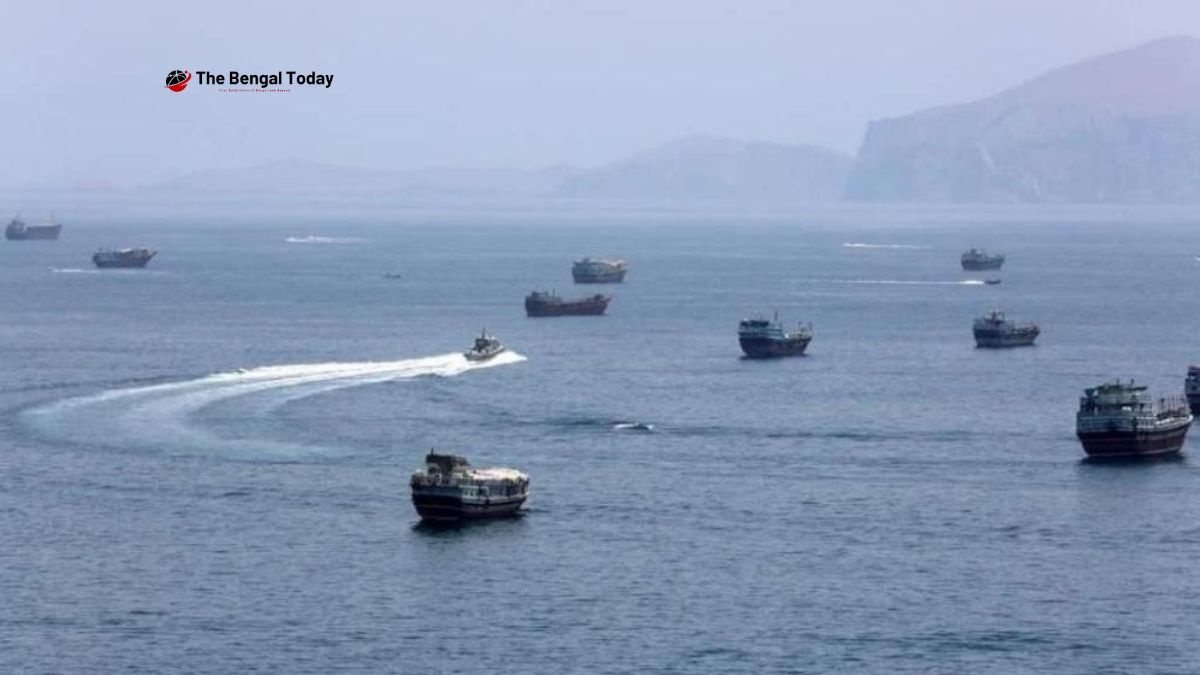
Fresh concerns have mounted over the energy security of the Suez Canal and its adjacent pipeline following a drone attack on two US-owned gas tankers at a Egyptian port.
The Sumed pipeline, stretching from the Red Sea across Egypt to the Mediterranean port of Sidi Kerir, has served as a critical alternative route for Saudi Arabian oil exports since the onset of the Iran conflict. While the Strait of Hormuz and the Bab al-Mandeb strait have faced continuous targeting from Iran and Yemen’s Houthi rebels, the Suez route had previously offered a reliable conduit to European and Mediterranean markets.
The drone strikes hit two tankers on Wednesday at Egypt’s Damietta port near the Nile Delta in the Mediterranean. Although no group has claimed responsibility and no direct threat to the Suez Canal itself has been issued, energy analysts warn that the risk profile of this critical maritime corridor has changed significantly.
“Attempting to bypass the Strait of Hormuz by taking the longer alternative route through the Red Sea, Suez, and the Mediterranean is now coming under threat. This puts nearly 5 million barrels of oil daily at risk.”
— Sal Kavonic, Head of Energy Research at MST Marquee
Disruption in Persian Gulf Routes: Nearly one-fifth of global crude and LNG was historically shipped through the Strait of Hormuz. Due to active conflict, tanker traffic through the strait has dwindled to negligible levels.
Shift to Northern Routes: According to Kpler data, crude shipments moving north toward the Suez Canal and Sumed pipeline from Saudi Arabia’s Yanbu port have surged—rising from 19.52 million barrels in April to 28.79 million barrels in July following Houthi threats.
Drastic Drop in Southbound Traffic: Conversely, southbound shipments through Bab al-Mandeb toward Asian buyers dropped from 81% of Yanbu’s exports in June to just 43% in July. Ships heading south are increasingly switching off Automatic Identification System (AIS) trackers or rerouting entirely around the African continent (Cape of Good Hope).
While crude prices dipped slightly as traders monitored bilateral talks between Iran and Oman regarding the Strait of Hormuz, analysts emphasize that operational and logistics costs will climb for shipping lines:
War Risk Insurance Premiums: Industry observers from Argus note that insurers are likely to demand higher “War Risk Premiums” for vessels navigating the Suez area following the attacks near Damietta.
Immediate Operational Status: Ally Blakeway, Head of Atlantic LNG at S&P Global Energy, remarked that the market has not yet priced in an immediate operational shutdown of the Suez Canal, though safety risks around nearby infrastructure remain elevated.
With Houthi rebels asserting that Saudi oil vessels remain within their drone and missile ranges, the alternative maritime paths connecting the Red Sea to Europe face growing logistical delays and rising freight costs.

