



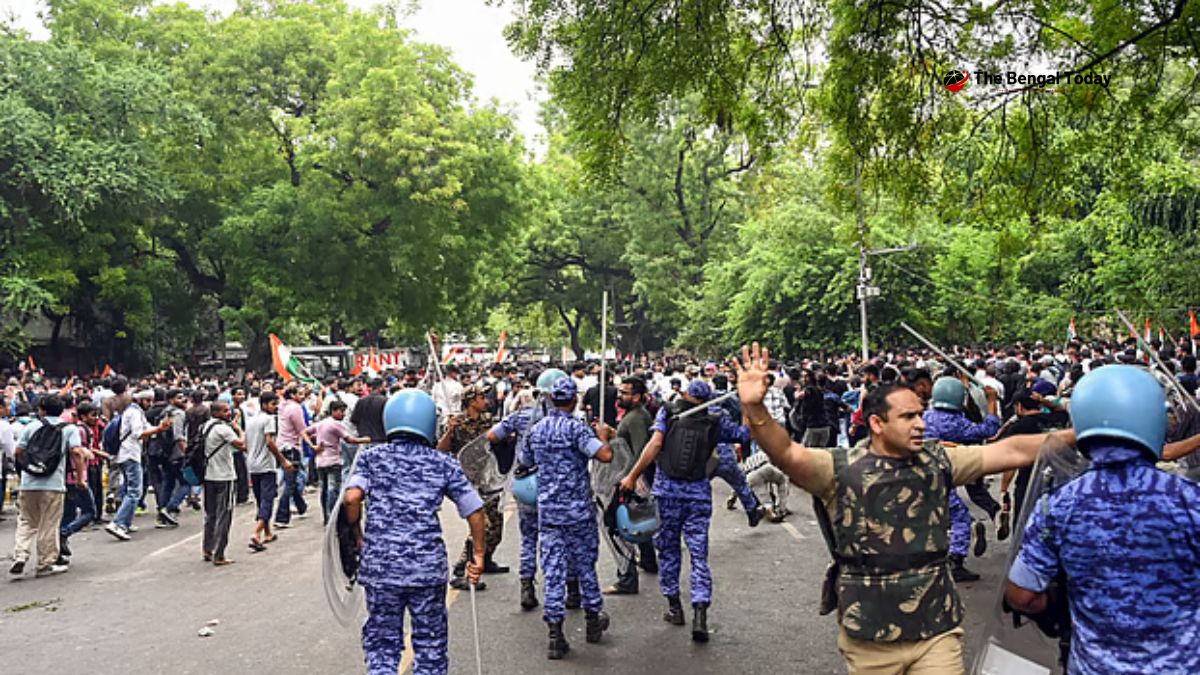
Carrying national flags, copies of the Constitution, and portraits of iconic figures, thousands of students braved a light drizzle in New Delhi to join a massive “March to Parliament” (Sansad Chalo). Organized by the youth political movement Cockroach Janata Party (CJP), the demonstration met a heavy-handed response from the Delhi Police, who used barricades and baton-charges (lathi-charge) to disperse the crowd heading toward Parliament.
The CJP has been spearheading protests for nearly a month, demanding the resignation of Union Education Minister Dharmendra Pradhan over digital corruption, NEET exam paper leaks, and alleged irregularities in CBSE exams. The march was timed to coincide with the opening day of Parliament’s Monsoon Session.
Ladakhi educationist and environmental activist Sonam Wangchuk, an active partner in the movement, had been on a hunger strike at Jantar Mantar. On Saturday, police forcibly removed him and admitted him to a hospital. From his hospital bed, Wangchuk urged fellow protesters to end their hunger strike.
After weeks of ignoring the agitation, the ruling BJP shifted its stance in the face of the massive student turnout. Union Health Minister and senior BJP leader Jagat Prakash Nadda (J.P. Nadda) invited CJP leaders for talks.
Responding to the development, CJP spokespersons Sourav Das and Ashutosh Rangka confirmed on social media:
“The government has shown interest in holding discussions. We are heading to meet J.P. Nadda.”
Prominent political figures and civil society representatives gathered at the rally to express solidarity. Among those present were Member of Parliament Mahua Moitra, Dalit leader Chandrashekhar Azad, representatives of the Aam Aadmi Party (AAP), as well as acclaimed actors Shabana Azmi and Prakash Raj.
Lending her voice to the movement, actor Shabana Azmi remarked:
“The Constitution of India grants us the right to peaceful and democratic protest. Today, we stand beside these young students on that very democratic path.”

