



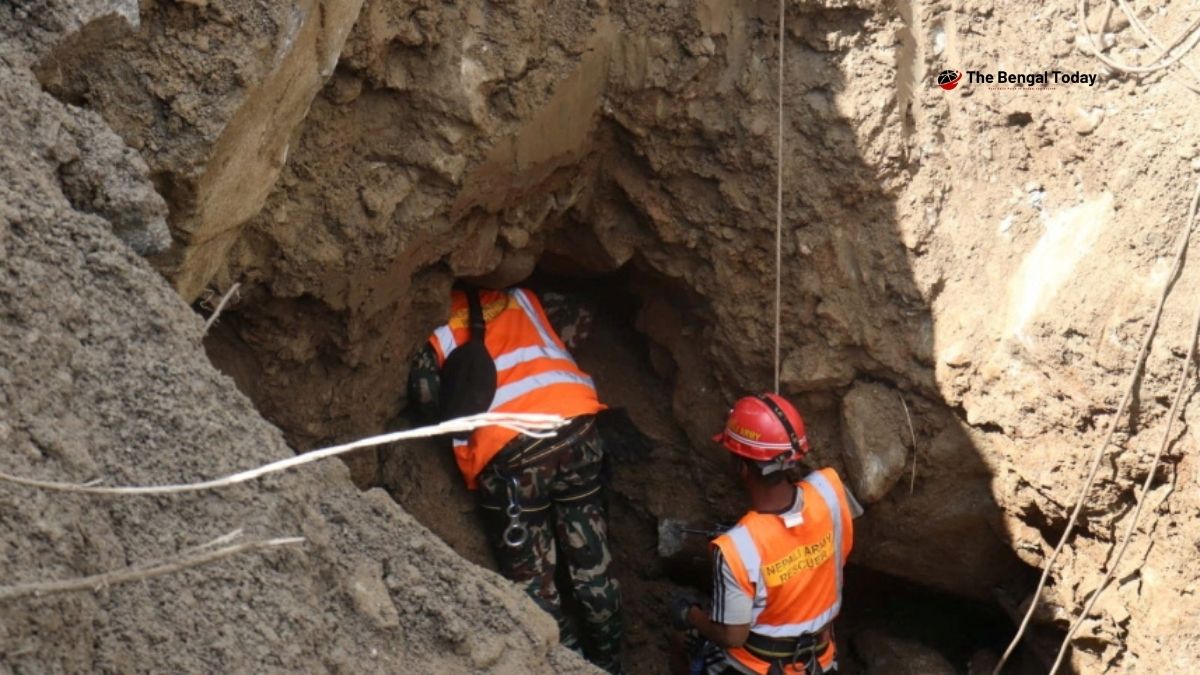
Rescuers in Nepal are waging a desperate, high-stakes operation to reach hundreds of workers trapped inside tunnels and underground installations across 12 hydropower projects in the Rasuwa and Nuwakot districts. According to disaster management authorities, a significant portion of the over 900 missing hydropower personnel are feared trapped inside these mud-clogged tunnels.
With oxygen levels steadily depleting inside the subterranean shafts, Nepal Army engineers have been joined by specialized expert teams from neighboring India and China. Search and rescue personnel face severe hazards due to treacherous terrain, over 40 destroyed bridges, and the altered flow of the swollen Trishuli River.
To clear massive debris and mud, army engineers are resorting to controlled explosives alongside heavy earth-moving equipment to carve out access routes, notably at the Upper Trishuli project.
While Nepal continues to manage general surface rescue operations independently, it relies heavily on technical expertise, life-detection devices from China, and modular truss bridges supplied by both India and China to access isolated mountain zones.
Nepali Prime Minister Balendra Shah reaffirmed the government’s resolve, stating that all-out efforts will continue despite adverse weather and severe geographic challenges to rescue every trapped worker.
Army engineers are using precision explosives alongside heavy excavators to breach sealed tunnel entrances clogged with mud and boulders.
Special tunnel-probing equipment from China—including life detectors—and temporary truss bridges from India and China are vital for restoring access across severed river crossings.
Balendra Shah assured the nation that state agencies will exhaust all technical resources to bring trapped citizens to safety.

