



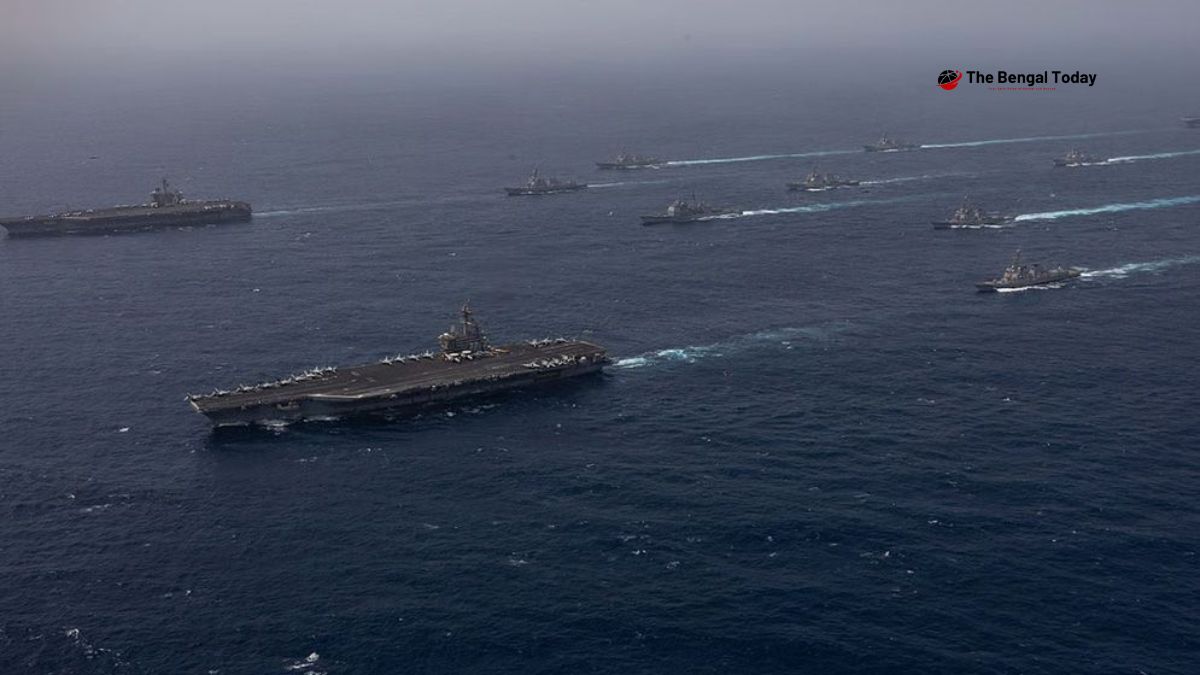
Amid ongoing geopolitical tensions between the United States and Iran, maritime traffic through the strategically vital Strait of Hormuz registered a sudden single-day surge of 44 percent. Citing data from maritime tracking provider MarineTraffic, Dubai-based news outlet Gulf News confirmed that 13 commercial vessels transited the strait on Thursday (August 13), up notably from 9 vessels recorded the previous day.
However, despite the single-day increase in transits, traffic levels remain far below pre-conflict baselines. Protracted standoffs between Washington and Tehran regarding navigational control and maritime route security continue to keep risks elevated across major shipping lanes.
Analysis of MarineTraffic data indicates that the majority of vessels currently navigating Hormuz are adhering to maritime channels designated by Iranian authorities. Additionally, both transit corridors registered notable activity from “shadow vessels” (ships concealing identity or ownership) and internationally sanctioned craft utilizing alternative routing to mitigate legal liabilities and conflict hazards.
On the same day, no new strikes were reported in the Red Sea’s Bab el-Mandeb Strait, where 29 vessel transits were logged. While this short-term uptick offers modest respite to global shipping lines, analysts maintain that spiraling oil prices and broader commercial disruption stemming from Hormuz restrictions are unlikely to normalize without a comprehensive US-Iran diplomatic resolution.

