



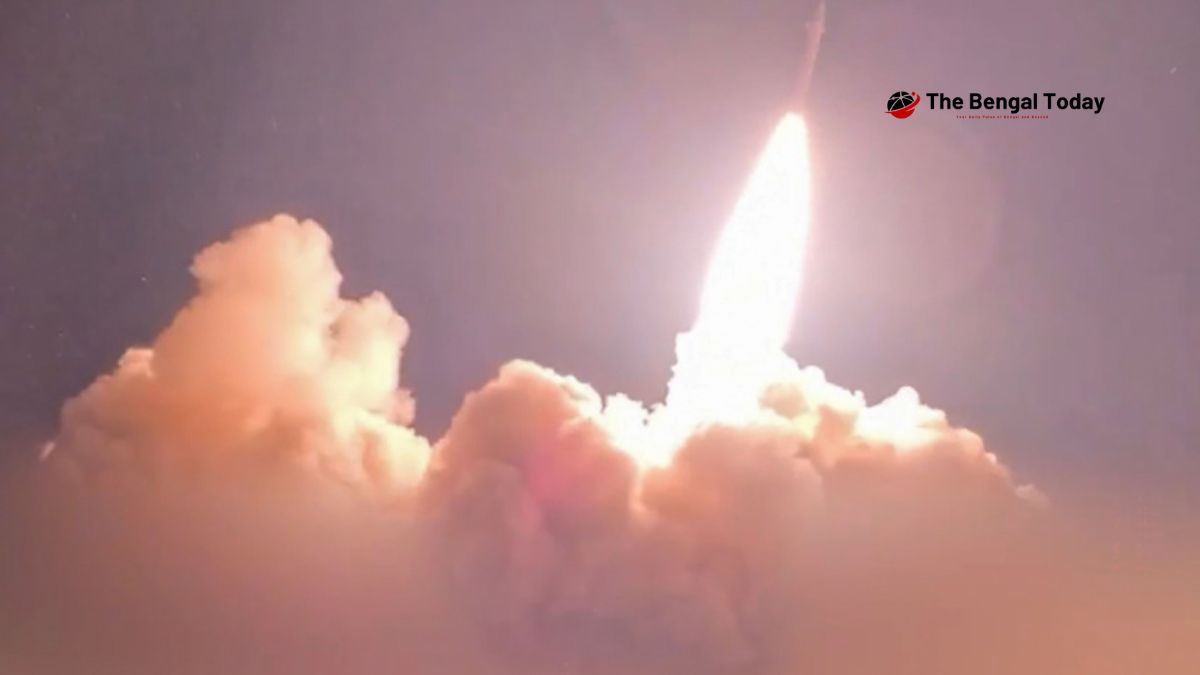
TEHRAN/WASHINGTON: Severe fighting has re-escalated in the Middle East as the United States launched a fresh wave of airstrikes on Thursday evening, targeting critical Iranian transport and communication infrastructure. In rapid retaliation, Tehran has unleashed missile and drone barrages against U.S. bases and Gulf allies across the region.
The renewed conflict over the strategic Strait of Hormuz—a vital global artery for oil and gas flows—comes just a month after a preliminary ceasefire agreement was brokered to halt the hostilities that initially erupted in late February.
U.S. Central Command (CENTCOM) announced Thursday night that its forces were conducting a new wave of strikes designed to “further degrade Iranian military capabilities.” This marks the sixth consecutive night of relentless American aerial operations.
According to Iranian state media, the strikes heavily damaged key civilian and transport logistics in the southern part of the Islamic Republic:
Transport Links Destroyed: The airstrikes directly struck two major bridges, a railway station, and a regional airport near the strategic strait.
Casualties Reported: State television confirmed that at least three people were killed during the targeted strikes on the bridges in Hormozgan province.
Explosions Near Nuclear Site: Two massive explosions were also reported in the western city of Bushehr—home to Iran’s only civilian nuclear power plant—which state media condemned as a “continuation of the American enemy aggression.”
Tensions reached a boiling point following U.S. strikes near a children’s cancer hospital in the southwestern city of Ahvaz. Iranian Foreign Ministry spokesman Esmaeil Baqaei slammed the attack as “barbaric.”
In direct response, Iran’s Revolutionary Guards (IRGC) launched a barrage of ballistic missiles at a U.S. airbase in Jordan. Residents in Ahvaz reported extreme panic during the initial American strikes. “The strikes were very intense,” said Hani, a 34-year-old local schoolteacher. “There were at least 11 or 12 explosions. My hands are shaking.”
Following Iran’s retaliatory warnings, Washington’s allies in the Persian Gulf have been placed on high alert. Early Friday, Kuwait’s military announced that its air defense systems were actively engaged in intercepting incoming missiles and drones. Meanwhile, air raid sirens pierced the night in Bahrain.
Simultaneously, the U.S. military has strictly reimposed its maritime blockade on Iranian ports. CENTCOM confirmed that American forces boarded a vessel in the Gulf of Oman to enforce compliance, adding that three ships have already been intercepted and rerouted since the blockade resumed.
A senior Iranian military spokesman issued a defiant message via state TV, asserting that Tehran will never back down. “The Strait of Hormuz will remain closed until the United States ends its aggression and completely withdraws its forces from the region,” the official stated.
The sudden collapse of June’s memorandum of understanding has alarmed international mediators. Pakistan’s Foreign Office spokesman, Tahir Andrabi, whose country helped broker last month’s preliminary deal, urged all factions to immediately halt the violence and return to technical-level talks.
However, Iran’s top negotiator, Mohammad Bagher Ghalibaf, cast doubt on future talks, warning that a deal “only has meaning when its clauses are valid and being actively implemented.”
In Washington, White House Press Secretary Karoline Leavitt told reporters that President Donald Trump intends to hold Iran fully accountable for violating the terms of the initial truce, though she noted the administration remains “open to diplomacy at the very same time.”

